Beautiful Flowers Coloring Page: A Versatile Creative Resource for Mindful Expression and Practical Design Use
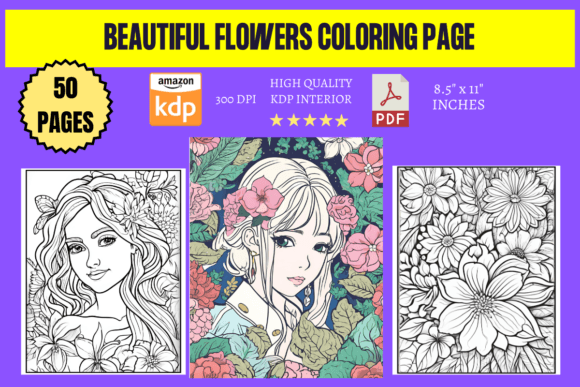
At its core, the Beautiful Flowers Coloring Page is more than a single illustration—it’s a gateway to focused attention, aesthetic exploration, and cross-disciplinary utility. While often associated with childhood pastimes, this particular digital collection—comprising 50 distinct, high-resolution coloring pages—has evolved into a functional tool adopted by educators, therapists, designers, small business owners, and lifelong learners. Its strength lies not in novelty alone, but in intentional design fidelity, technical readiness, and adaptability across contexts.
Design Integrity Meets Technical Precision
Each of the 50 pages in this set was crafted with deliberate compositional balance: floral motifs range from stylized botanical studies—think layered peonies with subtle vein detailing—to abstract interpretations featuring symmetrical mandalas built from petal forms. No two pages repeat structural logic; one may emphasize negative space for beginners, while another layers overlapping blossoms to support advanced shading practice. This variety avoids visual fatigue and sustains engagement across extended use.
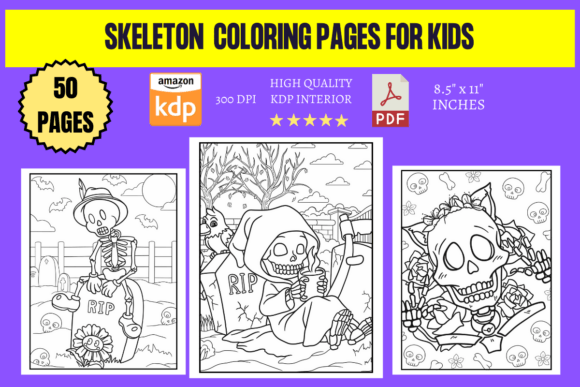
Technically, every page is delivered as both PNG (for transparent-background editing) and high-resolution 300 DPI JPG (optimized for physical output). The 8.5″ × 11″ dimension aligns with standard US letter size—ensuring compatibility with home printers, copy centers, and commercial print-on-demand platforms like Amazon KDP. Unlike low-DPI downloads that pixelate when enlarged, these files retain crisp linework even when scaled to 12″ × 18″ posters or reduced to 4″ × 6″ flashcards. That consistency matters whether you’re preparing classroom handouts or formatting a self-published adult coloring book.
Applications Beyond Leisure: Real-World Integration
Professionals across sectors have integrated the Beautiful Flowers Coloring Page collection into workflows where visual clarity, emotional regulation, and tactile engagement intersect.
- Educators use individual pages to scaffold art instruction—assigning specific blooms to teach contour drawing, symmetry analysis, or color theory principles. A dahlia page might anchor a lesson on radial balance; a climbing jasmine composition introduces concepts of implied line and rhythm. Because each image is print-ready and copyright-cleared for classroom duplication, teachers avoid licensing hurdles common with stock illustrations.
- Mental health practitioners incorporate selected pages into grounding exercises. Research supports structured coloring as a low-barrier entry point to present-moment awareness—particularly for clients hesitant about free-form art-making. Therapists report that floral themes resonate broadly due to their cultural neutrality and association with growth, renewal, and quiet resilience. Pages with moderate complexity (e.g., layered tulips with visible stamen detail) offer just enough cognitive load to redirect anxious thought loops without triggering frustration.
- Small business owners repurpose elements for branding assets. A simplified outline of a camellia from the set can become a watermark on client proposals; a cluster of lavender sprigs may be recolored and embedded into packaging labels. Since files are delivered in editable PNG format, designers can isolate stems, leaves, or petals using layer masks—transforming a coloring page into scalable vector-adjacent components without redrawing.
- Hobbyist creators treat the collection as a foundation for mixed-media work. Some scan completed colored pages, then digitally overlay textures—concrete grain, watercolor bleed, or linen weave—to create layered digital prints. Others translate outlines onto wood or ceramic blanks using transfer paper, turning 2D designs into tactile home décor objects. The clean, unbroken linework ensures faithful reproduction across substrates.
User-Centered Flexibility Across Age and Ability
Though marketed for adults and teens, the collection’s accessibility extends meaningfully to younger users and neurodiverse learners. Several pages feature bold, widely spaced outlines—ideal for children developing fine motor control—and avoid intricate internal patterning that may overwhelm early colorists. Conversely, pages with dense filigree or tessellated petal arrangements challenge advanced users seeking sustained focus. This tiered complexity allows a single purchase to serve multi-age households, intergenerational workshops, or inclusive after-school programs.
Notably, the absence of thematic clichés (no cartoon bees, smiling suns, or anthropomorphized blossoms) preserves dignity across age groups. A teenager isn’t “babyish” for choosing a magnolia page; an older adult isn’t “out of place” selecting a vibrant hibiscus. The botanical authenticity—accurate stamen counts, realistic leaf serration, naturalistic vine curvature—lends quiet authority. It signals respect for the user’s capacity for observation and appreciation, rather than defaulting to oversimplified tropes.
Workflow Integration: From Screen to Surface
How users engage with the Beautiful Flowers Coloring Page collection often reflects their broader creative habits. Digital artists commonly import PNGs into Procreate or Adobe Fresco, locking the base layer and experimenting with blending modes, gradient overlays, or custom brush textures—all while preserving original line integrity. Educators batch-print 5–10 pages per week, binding them into personalized “focus journals” for students who benefit from scheduled sensory breaks.
For print-on-demand entrepreneurs, the KDP-ready formatting eliminates prepress guesswork. Files require no resizing, bleed adjustment, or color profile conversion—reducing upload errors and speeding time-to-market. One independent publisher reported launching a themed “Botanical Calm” coloring book using 32 pages from this set, supplemented with original introduction text and reflection prompts. Total production time: under six hours.
Even researchers studying attentional states have utilized the collection methodologically. In a recent pilot study, participants completed identical floral pages under timed conditions while wearing EEG headsets. The standardized linework allowed precise comparison of neural activation patterns across varying levels of design density—something impossible with commercially variable coloring books.
Considerations for Intentional Use
While technically robust, the value of the Beautiful Flowers Coloring Page collection emerges most fully when matched thoughtfully to purpose. For example:
- Therapeutic settings benefit from curating pages by complexity—starting with open-form blossoms (e.g., cherry blossoms on bare branches) before progressing to densely packed compositions (e.g., gardenias with overlapping petals).
- Classroom integration works best when paired with observational prompts: “Compare the symmetry of this iris to the asymmetry of the bleeding heart on page 17,” or “Trace the path of the vine—where does it suggest movement?”
- Commercial reuse requires attention to file type: PNGs allow background removal for web graphics; JPGs ensure predictable color rendering on physical products. Always verify color mode (CMYK vs. RGB) if submitting to professional printers beyond home devices.
It’s also worth noting what this collection intentionally omits: no pre-colored examples, no step-by-step tutorials, no embedded advertisements or watermarks. That restraint supports autonomy—users define their own goals, pace, and interpretation. A student may spend 90 seconds filling a single daisy; a designer may spend three hours reworking a single stem into a logo mark. Both uses are equally valid, supported by the same underlying asset.
Shifting Perceptions of Creative Infrastructure
The rise of high-fidelity, multipurpose digital coloring resources like this 50-page set reflects a broader shift in how we conceptualize creative tools. They’re no longer disposable consumables but reusable infrastructure—assets that accrue value through repeated, context-specific application. A single Beautiful Flowers Coloring Page might begin as a stress-relief activity, evolve into a teaching aid, then reappear as source material for a textile pattern. Its utility multiplies not through quantity, but through thoughtful design continuity and technical reliability.
This durability matters in resource-constrained environments: schools with limited art budgets, community centers serving diverse populations, remote workers building personal wellness routines. Knowing a $12 digital download delivers 50 distinct, professionally rendered, immediately deployable pages changes the calculus of creative investment. It replaces fragmented sourcing—scouring free sites for usable images, wrestling with incompatible file types, compromising on resolution—with a unified, predictable starting point.
Ultimately, the Beautiful Flowers Coloring Page collection endures because it meets people where they are—not as passive recipients of entertainment, but as active agents shaping attention, expression, and environment. Whether used to steady a racing mind, illustrate a lesson plan, prototype a product, or simply reclaim five uninterrupted minutes, its lines hold space for intentionality. And in a world saturated with fleeting digital stimuli, that grounded presence remains quietly revolutionary.