Fairy SVG, DXF, EPS, JPG: Digital Design Assets Powering Creative Scalability in 2024
Designers, makers, and digital entrepreneurs no longer wait for print proofs or commission custom illustrations for every new campaign. Today’s creative workflows demand speed, precision, cross-platform compatibility, and seamless scalability—without sacrificing aesthetic integrity. At the heart of this shift lies a quiet but powerful category of digital assets: Fairy SVG, DXF, EPS, JPG files. More than just file formats, these are interoperable building blocks—engineered for versatility, optimized for production, and built to scale across physical and digital touchpoints.
What Exactly Is Fairy SVG, DXF, EPS, JPG?
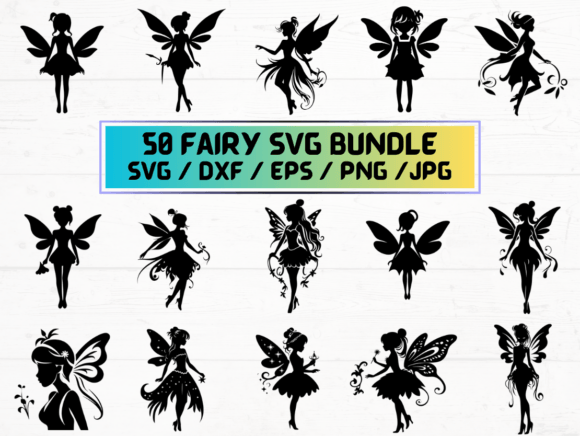
“Fairy SVG, DXF, EPS, JPG” refers to a curated, production-ready collection of vector and raster design files—specifically tailored for craft, print-on-demand, web, and marketing use. Unlike generic clipart or unoptimized stock graphics, this set is structured for real-world application:
- SVG (Scalable Vector Graphics): Resolution-independent files ideal for web use, Cricut/Silhouette cutting machines, and responsive UI elements. Each Fairy SVG retains clean paths, grouped layers, and consistent naming—enabling rapid editing in Figma, Illustrator, or Inkscape.
- DXF (Drawing Exchange Format): Industry-standard vector format native to CAD software and widely supported by CNC routers, laser cutters, and vinyl plotters. The included DXF files are pre-sanitized—no overlapping nodes, no stray anchors—so they load reliably into Glowforge, Boss Laser, or Roland systems.
- EPS (Encapsulated PostScript): A legacy—but still essential—vector format compatible with older RIP (Raster Image Processor) software used in large-format printing, embroidery digitizing, and commercial sign shops. With 90 EPS files included, users gain backward compatibility without sacrificing modern flexibility.
- JPG & PNG (300 dpi, transparent background): High-resolution raster derivatives optimized for social media banners, Shopify product mockups, email headers, and digital ads. The PNGs support alpha transparency; the JPGs offer lightweight alternatives for web compression where transparency isn’t required.
This isn’t a grab-bag of isolated files—it’s a cohesive asset system. Every fairy motif appears identically across all five formats, ensuring visual consistency whether you’re etching glass, printing tote bags, animating a landing page, or generating AI-assisted variations in MidJourney or Adobe Firefly.
Beyond Aesthetics: Why These Files Reflect a Broader Industry Shift
The rise of collections like Fairy SVG, DXF, EPS, JPG mirrors deeper transformations across creative industries. Consider three converging trends:
1. The Democratization of Precision Manufacturing
Just five years ago, laser-cut jewelry or CNC-carved home décor required technical expertise, proprietary software, and costly prototyping. Today, platforms like Etsy, Printful, and Gelato integrate directly with vector files—allowing small studios and solo creators to launch physical product lines overnight. Fairy SVG, DXF, EPS, JPG meets that need: it delivers production-grade vectors out-of-the-box, eliminating hours of manual cleanup, path reconstruction, or DPI recalibration. For freelancers managing multiple clients, this means faster turnaround. For entrepreneurs testing micro-product lines, it means lower barrier-to-entry and reduced risk.
2. The Convergence of Digital and Physical Branding
Modern brands operate across ecosystems: Instagram Reels, Shopify stores, pop-up retail booths, limited-edition enamel pins, and even AR filters. A single visual identity must translate flawlessly across each. Raster-only assets break down at scale—blurry on billboards, pixelated in app icons, incompatible with cutting software. Vector-first collections like Fairy SVG, DXF, EPS, JPG provide a unified source of truth. A designer can extract one fairy icon, resize it to 8px for a favicon or 8ft for a trade show backdrop—and maintain crisp edges throughout. That fidelity builds trust, reinforces brand cohesion, and eliminates last-minute asset emergencies.
3. The Acceleration of Hybrid Workflows
AI image generators now produce stunning concepts—but rarely output production-ready vectors. Tools like Adobe Express auto-generate social posts—but lack native DXF export for crafters. Meanwhile, designers juggle Figma for UI, Affinity Designer for print, and Silhouette Studio for vinyl. The Fairy SVG, DXF, EPS, JPG bundle bridges those gaps. It doesn’t replace AI or design tools—it complements them. You prompt an AI for “whimsical forest fairy logo,” then drop the resulting concept into Illustrator, swap in a precise Fairy SVG for final polish, export DXF for a client’s laser-cut business card, and push the PNG to Canva for a branded newsletter banner—all in under 20 minutes.
Practical Relevance: Who Uses This—and How?
It’s easy to assume such files serve only hobbyists. In practice, professionals across sectors rely on precisely this kind of interoperable asset library:
- Print-on-Demand Entrepreneurs: Upload Fairy PNGs directly to Redbubble or Teespring for instant t-shirt, sticker, and notebook designs—or layer SVGs over mockup templates in Placeit to generate photorealistic product previews before ordering inventory.
- Wedding & Event Designers: Use EPS files in CorelDRAW to create custom acrylic place cards, then switch to DXF for engraving wooden escort signs—all from the same fairy motif, preserving stylistic continuity across stationery, signage, and décor.
- Educational Content Creators: Embed SVGs into interactive e-learning modules (via HTML5 or LMS platforms like Thinkific), where scalable icons remain legible on mobile devices and assistive screen readers interpret structured vector paths more accurately than raster images.
- Marketing Agencies: Maintain brand-aligned social assets across client accounts. Store Fairy SVGs in shared cloud libraries (e.g., Dropbox + Illustrator CC Libraries), enabling teams to drag-and-drop consistent icons into Canva, Figma, or PowerPoint—no version conflicts, no font dependencies, no missing links.
Why Instant Download Matters—Now More Than Ever
The note “INSTANT DOWNLOAD • 50 SVG Files • 50 PNG Files 300 dpi with transparent background • 50 DXF Files • 50 JPG Files • 90 EPS Files” isn’t just a feature—it’s a workflow imperative. In 2024, time is the most constrained creative resource. Waiting 24–48 hours for emailed files disrupts momentum, delays client deadlines, and fractures focus. An instant ZIP delivery enables:
- Immediate validation: Open one SVG in your preferred editor within seconds—confirm color modes, layer structure, and sizing before committing to bulk use.
- Batch integration: Drag the entire folder into Adobe Bridge or Eagle for metadata tagging, keywording, and visual search—turning 290+ files into an indexed, searchable design system.
- Version-controlled reuse: Save the ZIP to your team’s shared drive with clear naming (e.g., “Fairy_Assets_v2024_Q3”)—ensuring everyone works from identical, up-to-date sources.
This immediacy aligns with how professionals actually work—not in isolated projects, but in continuous, iterative cycles of creation, feedback, and refinement.
A Strategic Asset, Not Just a Graphic Pack
Fairy SVG, DXF, EPS, JPG transcends its surface description. It represents a deliberate response to evolving expectations: creators expect interoperability, businesses demand production readiness, and platforms increasingly reward semantic, well-structured assets. It reflects maturity in digital design infrastructure—where file formats are no longer siloed technical artifacts, but coordinated components of a scalable creative stack.
For professionals building brands, launching products, or streamlining studio operations, investing in rigorously formatted, multi-format assets isn’t about convenience—it’s about strategic leverage. It reduces friction between ideation and execution, minimizes rework across channels, and future-proofs visual assets against platform changes or device fragmentation.
Ultimately, the value isn’t in the fairies themselves—it’s in the certainty they provide. Certainty that a file will open in your machine. Certainty that it will cut cleanly on your plotter. Certainty that it will scale without degradation on your client’s billboard. In a landscape defined by volatility and velocity, that certainty is not just useful—it’s indispensable.