Wizard Coloring Page Fork Kids: A Strategic Creative Asset for Educators, Publishers, and Small Business Owners
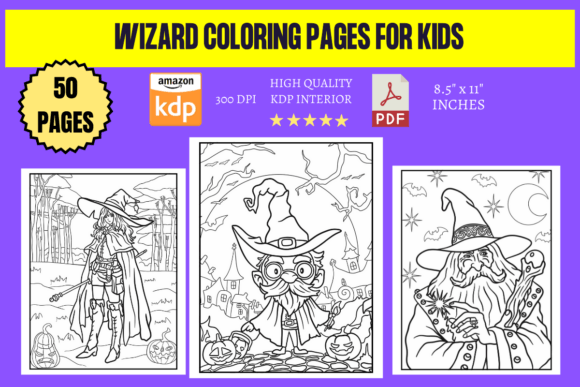
Wizard Coloring Page Fork Kids isn’t just another digital coloring download—it’s a purpose-built creative asset designed for intentionality. With 50 high-resolution, print-ready pages (8.5″ x 11″, 300 DPI, PNG and JPG), this collection delivers more than entertainment. It offers structure, scalability, and alignment—key levers for professionals who treat creative resources as operational tools, not afterthoughts.
Why This Isn’t Just “Another Coloring Book”
Most digital coloring products are created for passive consumption. Wizard Coloring Page Fork Kids is engineered for active application. Each of the 50 interior pages features original wizard-themed illustrations—distinct from generic clipart or AI-generated sameness—with consistent line weight, balanced negative space, and age-appropriate complexity for children aged 4–10. That consistency matters: it enables predictable printing outcomes, reliable KDP formatting, and cohesive branding across physical or digital touchpoints.
For educators, that means no last-minute editing before class—pages load cleanly, scale without pixelation, and support fine motor development without visual clutter. For small publishers or Amazon KDP sellers, it means faster time-to-market: the files are pre-sized, bleed-free, and optimized for both home printers and commercial press runs. For freelancers building themed activity kits, it provides a modular foundation—each page stands alone, yet collectively reinforces a unified aesthetic and narrative tone.
Strategic Use Cases Beyond “Just Coloring”
How you deploy Wizard Coloring Page Fork Kids determines its real-world ROI. Consider these grounded applications:
- Educational scaffolding: Pair specific wizard-themed pages with literacy or STEM prompts—e.g., “Design a spell that solves a real-world problem” (critical thinking) or “Label the parts of the wizard’s staff using geometry terms” (cross-curricular integration). The visual anchor supports retention without oversimplifying.
- Brand-aligned customer engagement: A children’s bookstore or indie toy shop can include one page as a printable “loyalty bonus” with online orders—reinforcing brand voice while delivering immediate value. No inventory, no shipping cost, just intentional connection.
- KDP product diversification: Rather than launching a single coloring book, use Wizard Coloring Page Fork Kids as the core interior for multiple SKUs—e.g., “Wizard Coloring + Spell Journal Prompts” or “Wizard Coloring + Early Math Challenges.” The base asset remains constant; the value layer shifts by audience need.
- Workshop or camp resource: Youth program coordinators can sequence pages to mirror learning arcs—introductory characters early in the week, complex scenes with layered symbolism later—turning coloring into reflective practice, not downtime.
Planning Your Deployment: What to Decide Before You Print or Upload
Success with Wizard Coloring Page Fork Kids hinges less on the files themselves and more on your clarity around three questions:
- What outcome am I optimizing for? Is it customer acquisition? Classroom engagement? Passive income via KDP? Each goal demands different packaging, positioning, and follow-up. A PDF sold directly to teachers needs usage guidance and curriculum links; a KDP upload needs compliant metadata and competitive category placement—not just “coloring book” but “children’s fantasy activity book ages 6–9.”
- What’s my distribution context? If you’re emailing pages to parents, prioritize JPGs for universal compatibility. If you’re bundling with a premium course, embed PNGs into a branded PDF with editable fields. If you’re uploading to KDP, verify that all 50 pages meet Amazon’s interior file requirements—including grayscale mode, no transparency layers, and correct margins. Skipping this step risks rejection or poor print fidelity.
- How will I extend, not exhaust, the asset? Repurposing Wizard Coloring Page Fork Kids once is efficient. Repurposing it meaningfully over time requires design discipline. Example: annotate one page with QR codes linking to read-aloud videos; crop another into flashcards for vocabulary games; isolate wand elements to create matching puzzles. The files are static—but your application doesn’t have to be.
Risks of Using Wizard Coloring Page Fork Kids Without Strategy
Without clear goals, even high-quality assets become liabilities. Common pitfalls include:
- Context collapse: Offering all 50 pages at once—without sequencing, framing, or pedagogical rationale—overwhelms users. Children disengage; educators skip to familiar resources; customers question perceived value. Quantity ≠ utility.
- Brand misalignment: Dropping Wizard Coloring Page Fork Kids into a non-fantasy-themed product line dilutes messaging. A science-focused subscription box shouldn’t feature wizard pages unless the theme is explicitly “science wizards” or “myth-busting magic”—and even then, the connection must be made explicit for the audience.
- Operational friction: Assuming “print-ready” means “plug-and-play.” Home printers vary in color calibration and paper handling. Test-print at least five diverse pages (character close-ups, full-scene layouts, text-heavy borders) before bulk printing or customer distribution. One mismatched hue or cropped edge can erode trust.
- Missed compliance windows: KDP updates file requirements periodically. A set uploaded successfully six months ago may now fail new validation rules—especially around embedded fonts or RGB vs. CMYK. Re-verify before each new edition launch.
Long-Term Value: Building Around, Not On Top Of
The most durable advantage of Wizard Coloring Page Fork Kids lies in its modularity. Unlike single-use templates, these 50 pages function as a system—not a solution. Think of them as raw material for iterative improvement:
Track which pages generate the highest engagement in your classroom or store. Which characters get colored first? Which scenes spark the most questions or storytelling? That behavioral data informs future content development—e.g., expanding the “wizard inventor” archetype if kids consistently add gadgets to those pages. Or identifying gaps: if no page includes collaborative magic (two wands, shared spells), that’s an opportunity to commission targeted additions.
For creators building intellectual property, Wizard Coloring Page Fork Kids also serves as low-risk validation. Launch a themed mini-site with 5 sample pages and a short survey: “Which wizard would you want to learn from—and why?” Responses shape character backstories, merch lines, or even animated shorts—grounding expansion in observed preference, not assumption.
Practical Next Steps for Intentional Use
If you’ve already acquired Wizard Coloring Page Fork Kids—or are evaluating it—start here:
- Map one page to one concrete goal. Example: Use Page #12 (the star-chart wizard) to introduce constellations in a summer camp science module. Add two bullet points of teacher notes beneath the image. Done.
- Batch-test file behavior. Open all 50 JPGs in a folder. Rename them sequentially. Check for accidental duplicates, missing files, or inconsistent naming—small errors that compound at scale.
- Define your “minimum viable bundle.” Don’t default to “all 50.” Start with 8–10 thematically linked pages + one usage guide. Measure response. Iterate.
- Document your decisions. Note why you chose certain pages for certain audiences. That log becomes invaluable when scaling or handing off to a team.
Wizard Coloring Page Fork Kids earns its place not through novelty, but through reliability and adaptability. It works because it’s built to be used—not admired, not stockpiled, but integrated. When aligned with deliberate goals, thoughtful planning, and realistic constraints, it becomes more than a coloring book. It becomes infrastructure for better outcomes.